
Request a quotation
If the instrument has never been calibrated at our calibration centre, register your instrument when requesting a quotation.
If you have already registered and calibrated the instrument at our calibration centre, request a quotation using the short form.
| Ionising radiation

Sector Manager: Luisella Garlati
Campus Bovisa
Via La Masa, 34
20156 - Milano
Telephon: 02.2399.6305
Mail: ornella.tambussi@polimi.it
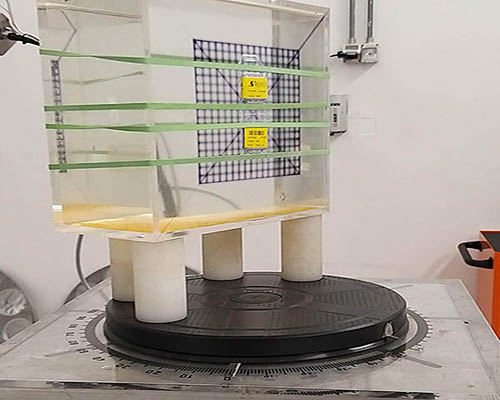
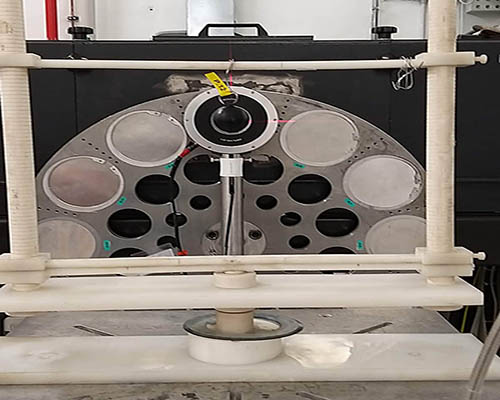
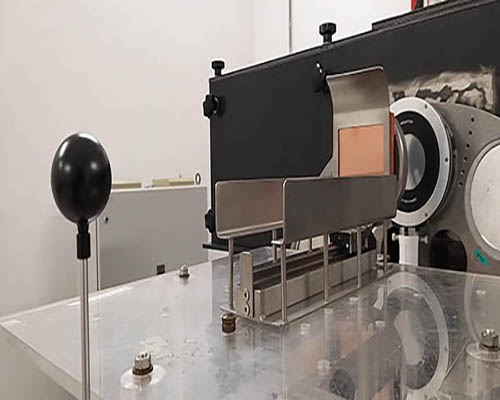
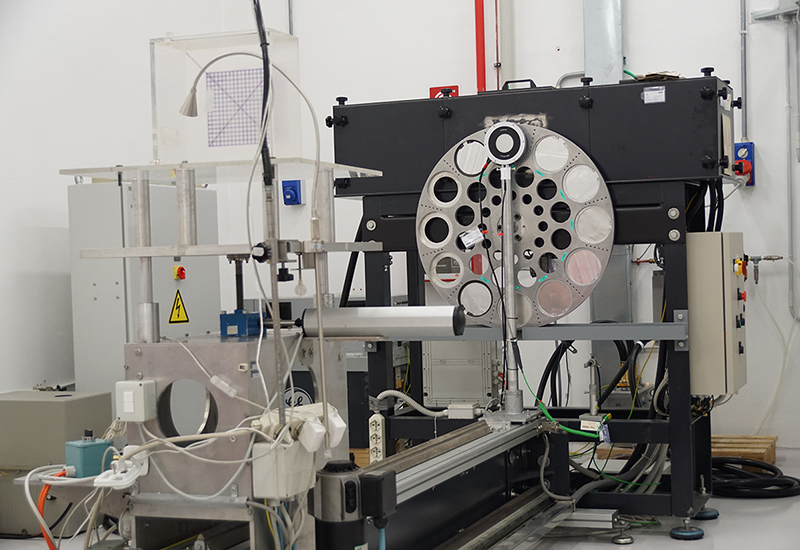
The sector performs the calibration by comparison of dosimeters and rateometers for environmental/personal radiation protection and radio-diagnostics.
The calibration, depending on the instrument, is applied to the quantities (and related expenses):
- Exposure
- Air-Kerma
- Ambient dose equivalent
- Directional dose equivalent
- Personal/shallow-dose equivalent
- Personal deep-dose equivalent
|
|
Download and fill out the Offer Request Form for a calibration |

DOSIMETRIA PER RADIOPROTEZIONE AMBIENTALE O MAMMOBRAGIA O ALTE DOSI CON RADIAZIONI X DI BASSA ENERGIA
|
Instruments in calibration |
Measuring |
Conditions |
Measuring range1 |
Uncertainty2 |
Method/Procedure3 |
|
|
Dosimetri per radioprotezione, mammografia, alte dosi 3 |
Rateo di Kerma in aria ka |
A lettura diretta |
≥ 1,3 • 10-5 Gy/s |
≤ 1,1 • 10-3 Gy/s |
2,0% |
Irraggiamento in aria libera con radiazioni X specificate nella tabella "RADIAZIONI DI RIFERIMENTO" CEI EN 61223-3-2:2008 |
|
Rateo di Kerma in aria ka |
A lettura diretta o indiretta |
(nota 4) |
(nota 5) |
|||
- The limit values of the measuring range are nominal values, as they vary according to the radiation quality and the reference quantity used. The effective limit values are specified, for each radiation and reference quantity, in the "LIMITS OF THE MEASURING RANGE" tables below
- To determine the best level of uncertainty declared by the Laboratory, the value of the measurement uncertainty must be further combined with the additional uncertainty component u (Q), specified in the “REFERENCE RADIATION” table for each radiation quality.
- Included are ionisation chambers supplied by the Principal without an associated charge measurement system and connected to the Laboratory charge measurement system.
- Derived from the corresponding magnitude in rate by multiplying by an irradiation time between 30 s and 3600 s.
- The estimated uncertainty values are the same as those of the corresponding magnitudes in rate, as the uncertainty contribution associated with the measurement time is very small (<0.1%) compared to the total uncertainty and does not change its value.
Certificate delivery time: 20 working days from the execution of the measurements
DOSIMETRIA PER RADIOPROTEZIONE AMBIENTALE, RADIODIAGNOSTICA E ALTE DOSI CON RADIAZIONE X DI MEDIA ENERGIA
|
Instruments in calibration |
Measuring |
Conditions |
Measuring range1 |
Uncertainty2 |
Method/Procedure3 |
|
|
Dosimetri per radioprotezione radiodagniostica e altre dosi |
Rateo di Kerma in aria, Ka |
A lettura diretta4 |
≥ 2,7 • 10-10 Gy/s |
≤ 1,5 • 10-8 Gy/s |
4,0% |
Irraggiamento in aria libera con radiazioni specificate nella tabella "RADIAZIONI DI RIFERIMENTO" UNI ISO 4037-1:2019 UNI ISO 4037-2:2019 UNIISO 4037-3:2019 CEI/IEC 61267:2006 |
|
> 1,5 • 10-8 Gy/s |
≤ 1,5 • 10-3 Gy/s |
2,0% |
||||
|
Kerma in aria, Ka |
A lettura diretta o indiretta4 |
(nota 5) |
(nota 6) |
|||
|
Dosimetri per radioprotezione ambientale |
Rateo di equivalente di dose ambientale H* (10) |
A lettura diretta4 |
≥ 3,3 • 10-10 Gy/s |
≤ 2,0 • 10-8 Gy/s |
7,0% |
|
|
> 2,0 • 10-8 Gy/s |
≤ 1,8 • 10-3 Gy/s |
6,0% |
||||
|
Equivalente di dose ambientale H* (10) |
A lettura diretta o indiretta4 |
(nota 5) |
(noa 6) |
|||
- The limit values of the measuring range are nominal values, as they vary according to the radiation quality and the reference quantity used. The effective limit values are specified, for each radiation and reference quantity, in the "LIMITS OF THE MEASURING RANGE" tables below.
- To determine the best level of uncertainty declared by the Laboratory, the value of the measurement uncertainty must be further combined with the additional uncertainty component u (Q), specified in the “REFERENCE RADIATION” table for each radiation quality.
- The general exposure procedure applies both to the calibration of direct reading instruments and to the irradiation of indirect reading instruments.
- Included are ionisation chambers supplied by the Principal without an associated charge measurement system and connected to the Laboratory charge measurement system.
- Derived from the corresponding magnitude in rate by multiplying by an irradiation time between 30 s and 3600 s.
- The estimated uncertainty values are the same as those of the corresponding magnitudes in rate, as the uncertainty contribution associated with the measurement time is very small (<0.1%) compared to the total uncertainty and does not change its value.
Certificate delivery time: 20 working days from the execution of the measurements
DOSIMETRIA PER RADIOPROTEZIONE AMBIENTALE CON RADIAZIONE GAMMA
|
Instruments in calibration |
Measuring |
Conditions |
Measuring range1 |
Uncertainty2 |
Method/Procedure3 |
|
|
Dosimetri per radioprotezione |
Rateo di Kerma in aria, Ka |
A lettura diretta4 |
≥ 2,7 • 10-10 Gy/s |
≤ 1,5 • 10-8 Gy/s |
4,0% |
Irraggiamento in aria libera con radiazioni specificate nella tabella "RADIAZIONI DI RIFERIMENTO" UNI ISO 4037-1:2009 UNI ISO 4037-2:2009 UNIISO 4037-3:2009 CEI/IEC 61267:2005 |
|
> 1,5 • 10-8 Gy/s |
≤ 5,5 • 10-6 Gy/s |
3,0% |
||||
|
Kerma in aria, Ka |
A lettura diretta o indiretta4 |
(nota 5) |
(nota 6) |
|||
|
Dosimetri per radioprotezione ambientale |
Rateo di equivalente di dose ambientale H* (10) |
A lettura diretta4 |
≥ 3,3 • 10-10 Sv/s |
≤ 2,0 • 10-8 Sv/s |
7,0% |
|
|
> 2,0 • 10-8 Sv/s |
≤ 5,1 • 10-6 Sv/s. |
6,0% |
||||
|
Equivalente di dose ambientale H* (10) |
A lettura diretta o indiretta4 |
(nota 5) |
(nota 6) |
|||
- The limit values of the measuring range are nominal values, as they vary according to the radiation quality and the reference quantity used. The effective limit values are specified, for each radiation and reference quantity, in the "LIMITS OF THE MEASURING RANGE" tables below.
- To determine the best level of uncertainty declared by the Laboratory, the value of the measurement uncertainty must be further combined with the additional uncertainty component u (Q), specified in the “REFERENCE RADIATION” table for each radiation quality.
- The general exposure procedure applies both to the calibration of direct reading instruments and to the irradiation of indirect reading instruments.
- Included are ionisation chambers supplied by the Principal without an associated charge measurement system and connected to the Laboratory charge measurement system.
- Derived from the corresponding magnitude in rate by multiplying by an irradiation time between 30 s and 3600 s.
- The estimated uncertainty values are the same as those of the corresponding magnitudes in rate, as the uncertainty contribution associated with the measurement time is very small (<0.1%) compared to the total uncertainty and does not change its value.
Certificate delivery time: 20 working days from the execution of the measurements
DOSIMETRIA PER RADIOPROTEZIONE PERSONALE
|
Instruments in calibration |
Measuring |
Conditions |
Measuring range1 |
Uncertainty2 |
Method/Procedure3 |
|
Dosimetri per radioprotezione personale |
Rateo di equivalente di dose personale superficiale Hp 0,07) |
A lettura diretta4 |
da 3,0 • 10-4 Sv/s a 2,0 • 10-8 Sv/s |
6,0% |
Irraggiamento in aria libera con radiazioni specificate nella tabella "RADIAZIONI DI RIFERIMENTO" UNI ISO 4037-1:2009 UNI ISO 4037-2:2009 UNIISO 4037-3:2009 |
|
da 2,0 • 10-8 Sv/s a 3,3 • 10-10 Sv/s |
7,0% |
||||
|
Rateo di equivalente di dose personale al cristallino Hp (3) |
da 3,2 • 10-4 Sv/s a 2,0 • 10-8 Sv/s |
6,0% |
|||
|
da 2,0 • 10-8 Sv/s a 3,3 • 10-10 Sv/s |
7,0% |
||||
|
Rateo di dose personale superficiale Hp (10) |
da 1,2 • 10-4 Sv/s a 2,0 • 10-8 Sv/s |
6,0% |
|||
|
da 2,0 • 10-8 Sv/s a 3,3 • 10-10 Sv/s |
7,0% |
||||
|
Rateo di equivalente di dose personale superficiale Hp (0,07) |
A lettura diretta o indiretta4 |
(nota 5) |
(nota 6) |
||
|
Rateo di equivalente di dose personale al cristallino Hp (3) |
|||||
|
Rateo di dose personale superficiale Hp (10) |
- The limit values of the measuring range are nominal values, as they vary according to the radiation quality and the reference quantity used. The effective limit values are specified, for each radiation and reference quantity, in the "LIMITS OF THE MEASURING RANGE" tables below.
- To determine the best level of uncertainty declared by the Laboratory, the value of the measurement uncertainty must be further combined with the additional uncertainty component u (Q), specified in the “REFERENCE RADIATION” table for each radiation quality.
- The general exposure procedure applies both to the calibration of direct reading instruments and to the irradiation of indirect reading instruments.
- Included are ionisation chambers supplied by the Principal without an associated charge measurement system and connected to the Laboratory charge measurement system.
- Derived from the corresponding magnitude in rate by multiplying by an irradiation time between 30 s and 3600 s.
- The estimated uncertainty values are the same as those of the corresponding magnitudes in rate, as the uncertainty contribution associated with the measurement time is very small (<0.1%) compared to the total uncertainty and does not change its value.
Certificate delivery time: 20 working days from the execution of the measurements
Reference radiation:
Limits of the measuring range
- Air-Kerma rate
- Ambient dose equivalent rate
- Personal deep-dose equivalent
- Personal/shallow-dose equivalent rate
- Personal/shallow-dose equivalent rate to the lens
Calibrations are carried out by appointment, possibly in the presence of the applicant. The sample is returned to the owner at the end of the calibration. The Principal attends only as an observer. If the Principal intends to make adjustments to the instrument, these can only be made at the end of calibration. The Principal can request a new calibration. The cost of the service will be the one envisaged for the subsequent calibration points. If it is not possible to proceed with the calibration due to malfunctioning of the instrument, the certificate will not be issued, the customer will be informed of the problem encountered and an invoice will be issued as a lump sum payment for the work performed. If the instrument arrives without batteries or with flat batteries, the calibration will be carried out by replacing them with batteries in our possession which, at the end of the calibration, will be retained by the laboratory; an extra charge for this will be applied to the cost of calibration.